




Introduction – An Accent Chair Should Do More Than Look Good
An accent chair is often treated as the finishing touch in a living room, but the right one can do much more than fill an empty corner. It can add comfortable extra seating, balance the proportions of the room and introduce a different shape, texture or colour without making the space feel over-styled. The wrong chair can have the opposite effect, looking disconnected from the rest of the furniture or taking up valuable floor space without being particularly useful.
The best choice comes from looking beyond appearance alone. Think about how the chair will be used, how much room it can realistically take up and how it will relate to the sofa and other furniture around it. Once those practical details are right, you have much more freedom to choose a design that adds personality to the room.
Start with What You Need the Chair to Do
Before comparing fabrics or colours, decide what role the chair needs to play. In a family living room, it may be used every day as an extra seat. In another home, it might become a reading chair near a window or floor lamp, occasional seating for visitors, or simply a way to make an awkward corner feel intentional. These uses call for different levels of comfort, support and visual impact.
If the chair will sit beside a large sofa, start by considering the overall scale of that seating area. Looking at our sofas can also help you compare common sofa proportions with the type of accent chair you have in mind. The goal is not to create a perfectly matching set, but to make sure the chair feels like it belongs in the same room.
Get the Size and Proportions Right
An accent chair that looks well proportioned in a showroom photo can feel very different once it is placed in your living room. Check the chair’s overall width, height and depth, then compare those measurements with the space available and the size of nearby furniture. A small chair may look lost next to a substantial modular sofa, while an oversized armchair can make a compact room feel crowded.
Seat height is worth checking as well. It does not have to match the sofa exactly, but a dramatic difference can make the seating arrangement feel visually uneven. In smaller rooms, chairs with a lighter frame or more visible floor underneath can help preserve a sense of openness. Larger rooms can usually handle a fuller upholstered silhouette without the chair dominating the layout.
Where Should You Place an Accent Chair?
The most natural position depends on how the room is used. A chair beside or slightly angled toward the sofa can create an easy conversation area. Placing one opposite the sofa can help balance a larger living room, while an empty corner near a window can become a useful reading spot rather than wasted space. In some layouts, two coordinated accent chairs can frame the main seating zone and give the room stronger symmetry.
Whatever position you choose, leave enough room for people to move comfortably around the chair. A beautiful chair quickly becomes frustrating if it blocks a doorway, squeezes a walkway or has to be moved every time someone needs access to another part of the room. Marking the chair’s footprint on the floor with painter’s tape is a simple way to test placement before buying.
Should Your Accent Chair Match Your Sofa?
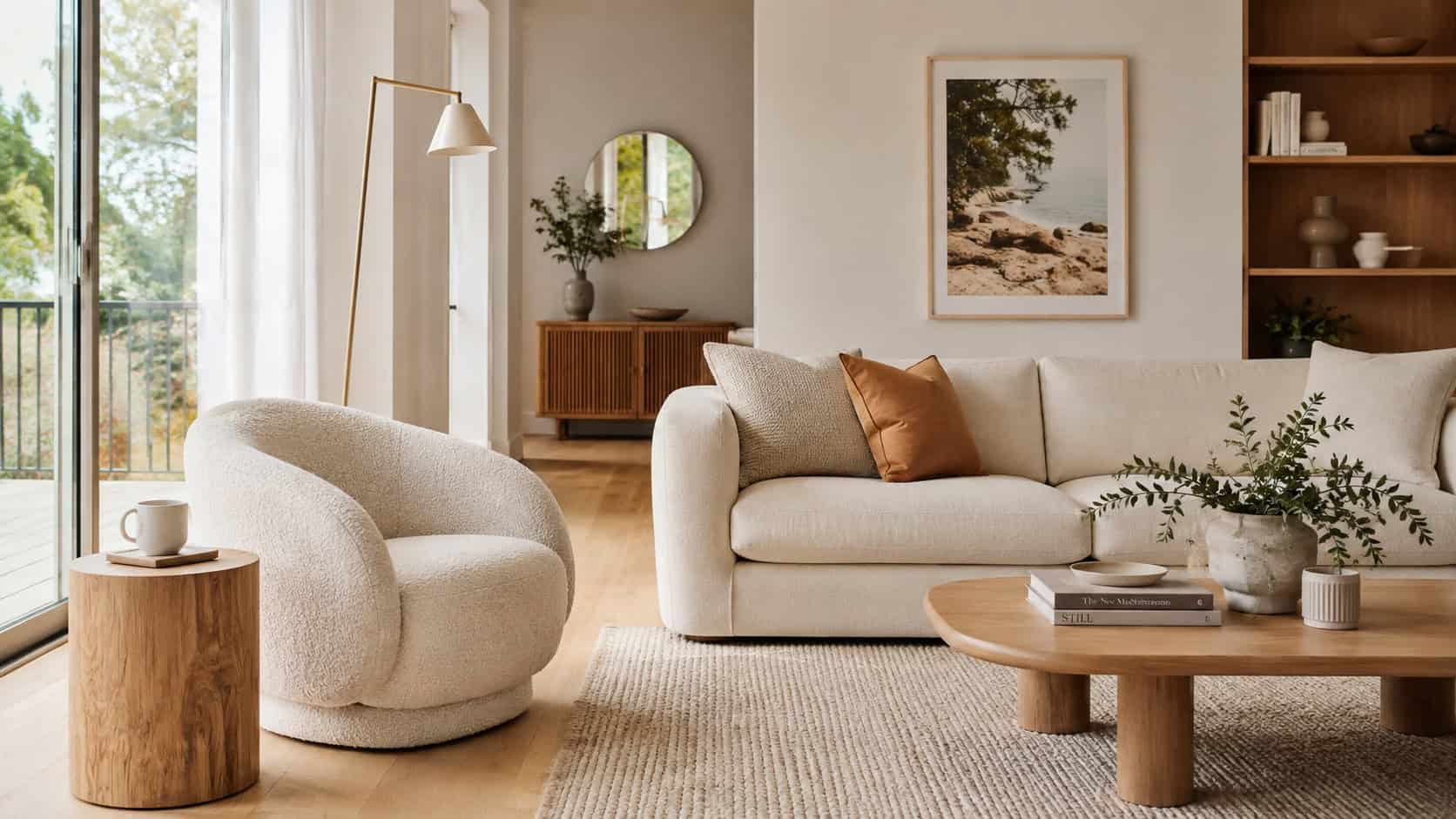
Your accent chair does not need to match the sofa exactly. In many living rooms, a slightly different chair makes the space feel more layered and considered than a complete matching suite. The important part is finding a visual connection so the contrast feels deliberate rather than random.
That connection might come from a shared colour family, similar timber details, repeated curves or a material that appears elsewhere in the room. A simple neutral sofa can work well with a chair that has more texture or a stronger silhouette. If the sofa is already a statement piece, a quieter accent chair may give the room better balance. Aim for coordination rather than duplication.
Choosing the Right Material and Colour
Material has a big influence on both the look of the chair and how practical it feels day to day. Upholstered fabric is versatile and comfortable, while textured finishes such as bouclé can add softness and visual interest. Velvet can create a richer, more decorative feel. If the chair will be used regularly, consider how the fabric is likely to handle everyday wear as well as how it looks when new.
Colour should work with the same principle. Neutral shades are easy to integrate and give you flexibility if you change cushions, rugs or other furniture later. A stronger colour can turn the chair into a focal point, but it usually works best when that colour is echoed somewhere else in the room. If you are still deciding on the broader look of your home, our Furniture Style Guide can help you identify the design elements you want to repeat.
Comfort Still Matters
It is easy to get distracted by a chair with a great shape, but comfort matters if anyone will actually sit in it for more than a few minutes. Seat depth, back support, arm height and cushioning all affect how the chair feels. A very upright chair may be fine for short conversations, while a deeper, more supportive seat is usually better for reading or relaxing.
Think about who will use the chair most often. If it is mainly decorative or reserved for occasional guests, you may be happy to prioritise appearance. If it will become part of the family’s everyday seating, comfort should carry much more weight in the decision. The most successful accent chair is one people naturally choose to sit in, not one everyone avoids because it only looks good.
How to Style Around an Accent Chair
An accent chair tends to look more intentional when it forms part of a small functional zone. Depending on the room, that could mean adding a floor lamp for reading, positioning part of a rug underneath the chair or placing a small surface nearby for a drink, phone or book. You only need a few supporting elements; too many accessories can make the area feel cramped.
If a small surface would make the chair more practical, our side tables can work well beside it without taking up the visual weight of a coffee table. Choose a table that is easy to reach from the seat and leave enough space around both pieces for comfortable movement. Styling should make the chair easier to use, not turn the corner into a display that gets in the way.
Final Thoughts
Choosing an accent chair becomes much easier when you focus on four things: purpose, size, comfort and style. Get those basics right first, then use colour, texture and shape to give the room character. The chair does not need to match your sofa perfectly, but it should feel proportionate to the room and connected to the furniture around it.
A well-chosen accent chair can become one of the most useful pieces in a living room as well as one of the most visually distinctive. Explore our accent chairs to find a design that suits your space and the way you use it.